


Let’s address the frosty elephant in the room: winter and electric vehicles. If you spend any time on EV forums or news articles, you’ll see headlines warning about dramatic range loss, frozen charging ports, and stranded drivers shivering by the roadside.
But how much of this is reality, how much is myth — and when it comes to the stories that are real, how much of it is actually avoidable?
If you’re wondering whether owning an EV in the winter is a deal-breaker, especially in Canada, I’m here to say: not even close.
As someone living in the Lower Mainland of Vancouver, where sub-zero temperatures are rare, the typical electric vehicle winter concerns just don’t apply to me. But I also grew up in Yellowknife, Northwest Territories, the kind of place that sees -40°C regularly in winter.
I recently drove my Tesla Model Y to Yellowknife (in summer), and while chatting with locals, the most common response to seeing an EV was: “You could never own one here in the winter.”
I disagree.
Winter Driving in Northern Canada: A Personal Take
Let me be clear: winter driving with an EV isn’t the issue—long-distance winter road trips are.
Most of the concerns people raise about EVs in winter come from the idea of driving hundreds of kilometers in sub-zero conditions, which is rarely how most Canadians actually drive in winter.
When I lived in Yellowknife, I drove a lot during the winter—like everyone else. But it was almost always short-distance and within town.
Like most people there, I flew out of town during the colder months, and local driving around town was short distances and predictable. And this is exactly where EVs shine in cold climates: short trips, predictable routes, and the ability to charge at home.
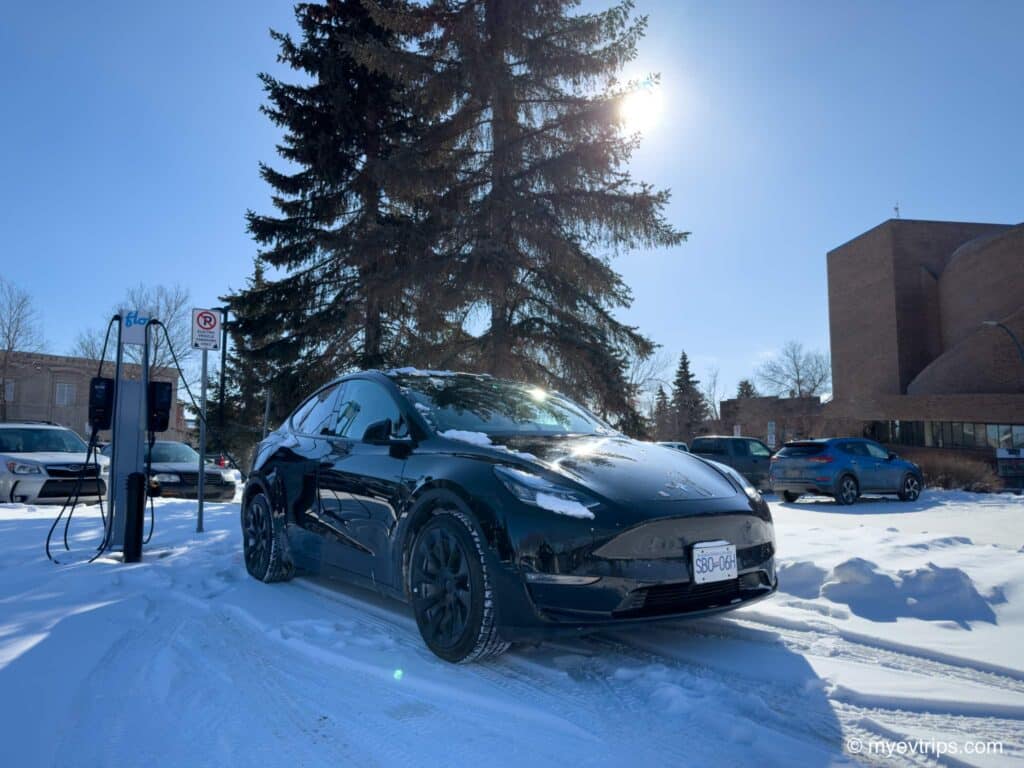
Let’s also not confuse winter in Vancouver with winter in Yellowknife. In the Lower Mainland, where I currently live, we seldom drop below freezing. EV performance in these conditions is barely affected and definitely not a concern for daily driving.
That said, even in extreme cold, an EV would handle local driving around Yellowknife with ease, especially if you have charging at home. Everyone there already plugs in their gas car to keep the block heater warm, and many let them idle just to stay usable.
With an EV, you skip the fuel waste, and you can even preheat the cabin while plugged in. Predictable short trips around town with regenerative braking and no engine maintenance? Even better.
I wrote more about the summer drive up north and why attempting it in winter would be a different story in this Yellowknife to Edmonton EV drive post.
Real Talk: EV Winter Range Can Suffer
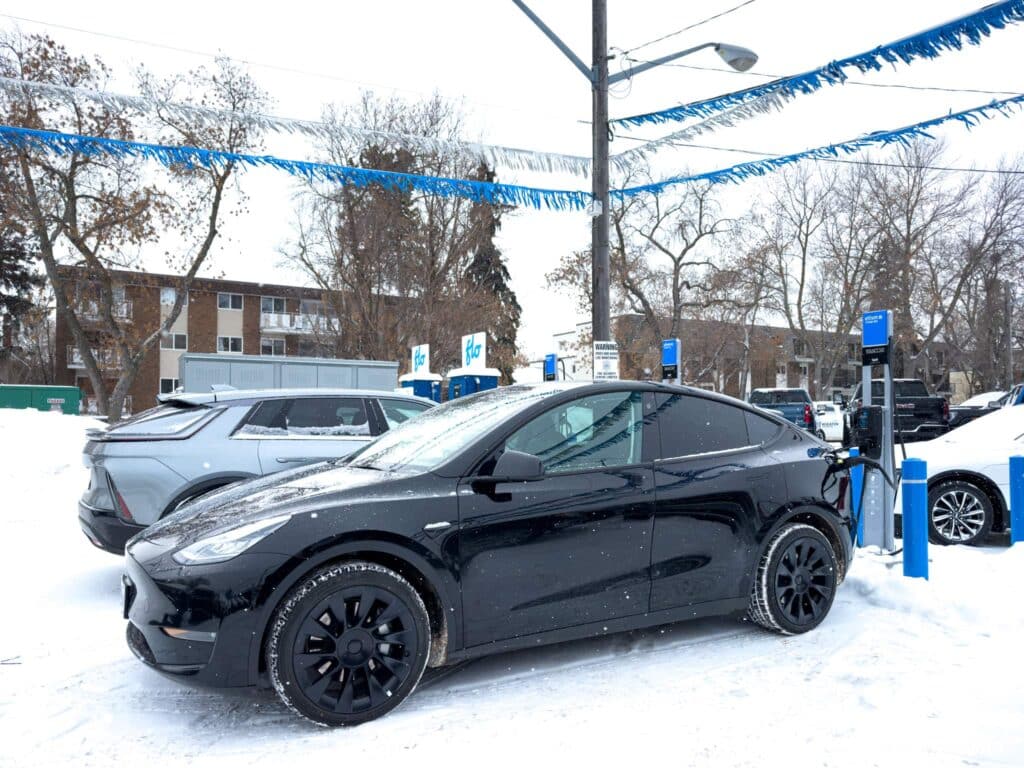
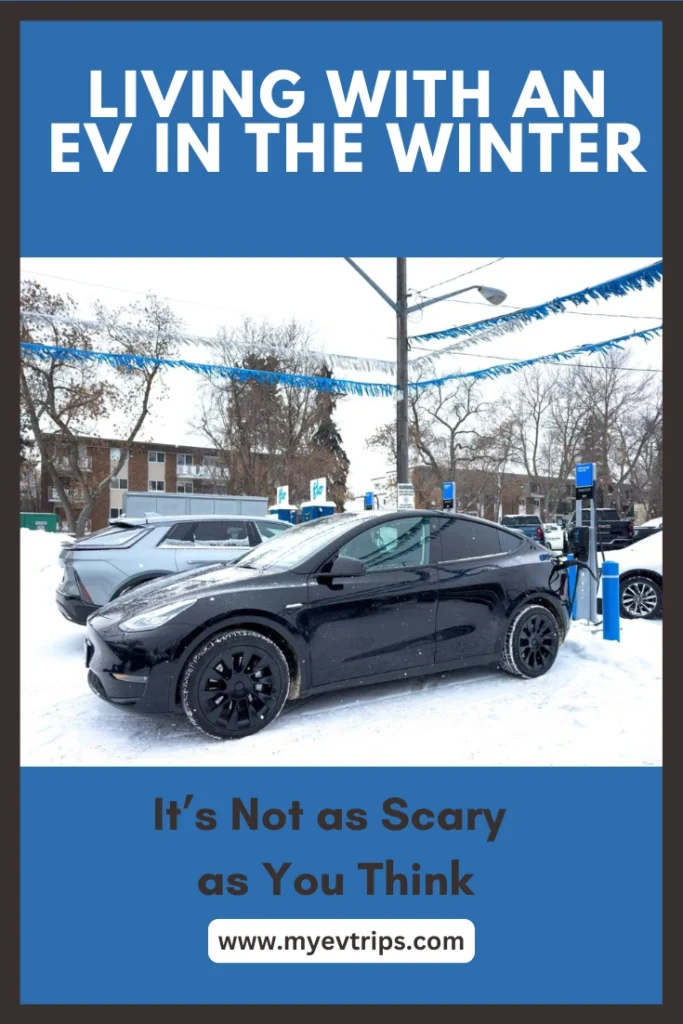
I’ve also had first-hand experience with winter EV driving outside of Vancouver. On a trip to Edmonton in the middle of winter, I rented a Tesla Model Y and got to see how it really handled in -20°C conditions. The experience showed me both sides of winter EV life:
- Frozen Tesla Superchargers that slowed or prevented charging at some stops.
- Noticeable drop in range, especially when driving at highway speeds.
- But also — remote cabin pre-heating with a single tap on the app.
It reinforced my belief that while winter EV driving does require a little more planning, it’s absolutely manageable, and often more comfortable than driving a gas vehicle in the same conditions.
Let’s not sugarcoat it: yes, EV range drops in cold weather. The lithium-ion batteries powering your Tesla, Hyundai IONIQ, or Ford F-150 Lightning become less efficient when temperatures dip below freezing.
Real‑world tests from the Canadian Automobile Association found that in cold conditions (around −15 °C), EV range can drop between about 14% and 39% compared with official estimates under mild weather conditions.
This is why a trip that your EV handles easily in summer may require an extra charge in the winter — and that’s exactly what happened to a fellow Canadian EV owner who shared his story in a Facebook group.
“I live in Hay River, NWT. I have a Model Y with 25,000 km. I travelled yesterday from Hay River to High Level, AB – 310 km. In summer I can make the trip on one charge with 20% left. But yesterday, road temps were -32°C to -28°C. I had to use the only charger 39 km into the trip. The Tesla said I’d make it with -4.5%, but I ran out of charge 4.6 km from my destination. I had to get towed and paid $509.”
Frustrating? Absolutely. Avoidable? Also yes. The driver later updated:
“Made it back home today with no problem at all – proper tire pressure and a tailwind. Temps were warmer, -17°C to -20°C, and I arrived with 14% battery.”
His experience underscores the importance of planning, understanding weather impacts, and making smart choices, just like you would with any vehicle in extreme conditions.
One of the easiest ways to avoid situations like this is making sure you have the right Tesla charging adapters and cables for every possible scenario and planning out your trip for worst-case scenarios.
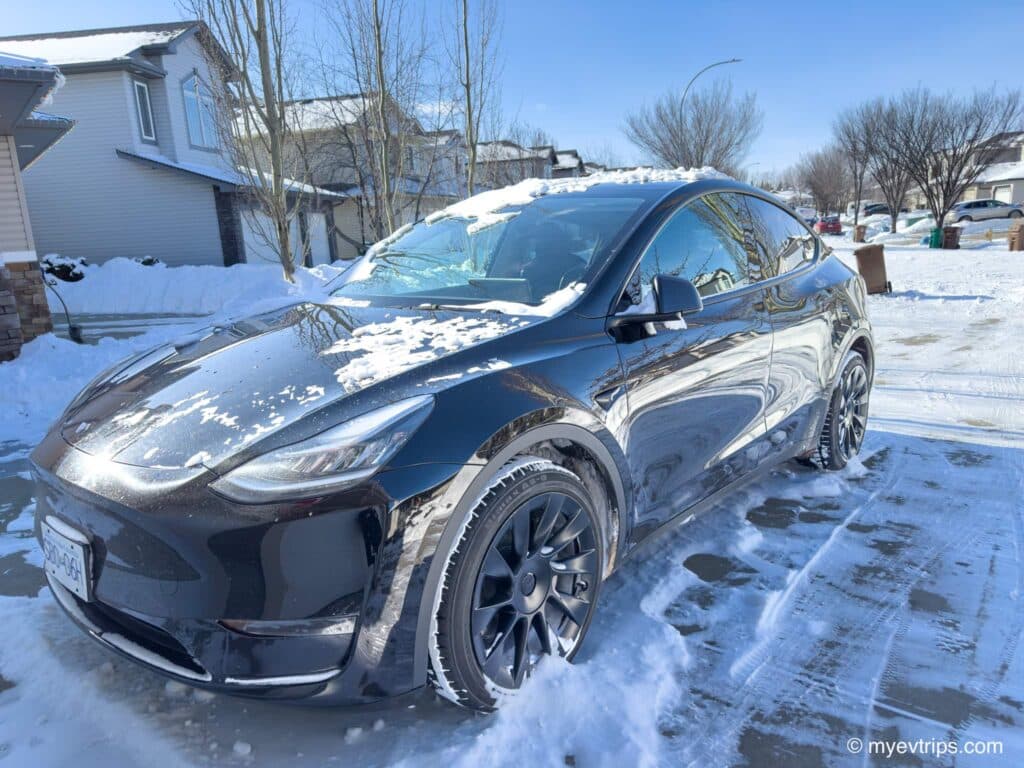
Also important? Understanding how your Tesla battery health may have changed over time. As batteries degrade, your EV winter range could shrink more than expected, something I explored in my Tesla battery degradation guide.
EV Adoption in Cold Places: Yukon and Norway
If Tesla winter range or cold performance were a true deal-breaker, you wouldn’t see adoption in places like Norway or the Yukon. And yet:
- Yukon has seen remarkable EV growth despite its subarctic climate. As of 2024, around 11.4% of all light-duty vehicle registrations in the territory are electric vehicles, putting it among the highest per capita EV adoption rates in Canada (Electric Autonomy). DC fast chargers have also been rolled out along key highway corridors to support this growing EV network, something I took full advantage of on my southbound trip from the Arctic Ocean.
- Norway continues to lead the world in EV adoption despite its long, cold winters. In 2025, about 96% of all new cars registered in Norway were fully electric, with nearly 92% of all passenger vehicles sold being electric (battery and plug-in hybrid combined). This makes Norway the highest EV market share country globally (Reuters, WRI).
Clearly, cold weather isn’t stopping them.
I saw this firsthand when I drove my EV up the Dempster Highway to the Arctic Ocean. It was one of the most remote and challenging EV adventures I’ve had, and it proved that with planning and infrastructure, it’s absolutely doable.
EV owners in these places make it work with smart planning and appropriate charging infrastructure. If it works in Whitehorse and Oslo, it can work in Winnipeg and Yellowknife too, especially for locals who don’t road trip during the depths of winter.
electric vehicle winter Driving Tips

If you’re considering an electric vehicle and worried about winter performance, here are some real-world EV tips:
- Charge at home: A Level 2 charger means you’ll always start the day with a full battery and a warm cabin.
- Precondition the battery and cabin: Most EVs let you do this remotely. It helps extend range and comfort.
- Check tire pressure: Cold air reduces PSI, which impacts efficiency. Inflate to recommended levels.
- Drive efficiently: Use eco mode, limit speed, and take advantage of regenerative braking.
- Know your route: Plan around fast chargers and allow for buffer on longer trips.
- Watch the wind: Headwinds affect range, just like they do in a gas car.
- Avoid long road trips below -30°C: Just like you probably do now anyway.
Also, don’t underestimate how messy winter can get. If you’re driving a Model Y like me, check out my Tesla floor mat post to keep slush and snow from wrecking your interior.
Winter EV Benefits No One Talks About
There are plenty of electric vehicle winter benefits too:
- Instant heat: Unlike gas vehicles, EVs heat up immediately.
- No engine oil or transmission fluid to freeze
- Quieter ride on snowy roads
- Regenerative braking provides additional control in slippery conditions
And for peace of mind, I always recommend staying connected – something made much easier with my Starlink internet setup. If you’re out in remote areas, being online can be a literal lifesaver.
Who Should Worry About EVs in Winter?
If you live in remote areas, regularly take 300+ km trips in -30°C temps, and lack access to fast chargers, then yes, winter EV ownership may not be ideal yet. But for the vast majority of Canadians, and especially urban dwellers, the fear is overblown.
EVs are not just viable in the winter; they’re often better. It just takes a shift in mindset and a bit of preparation.
My Final Word on Tesla Winter Driving
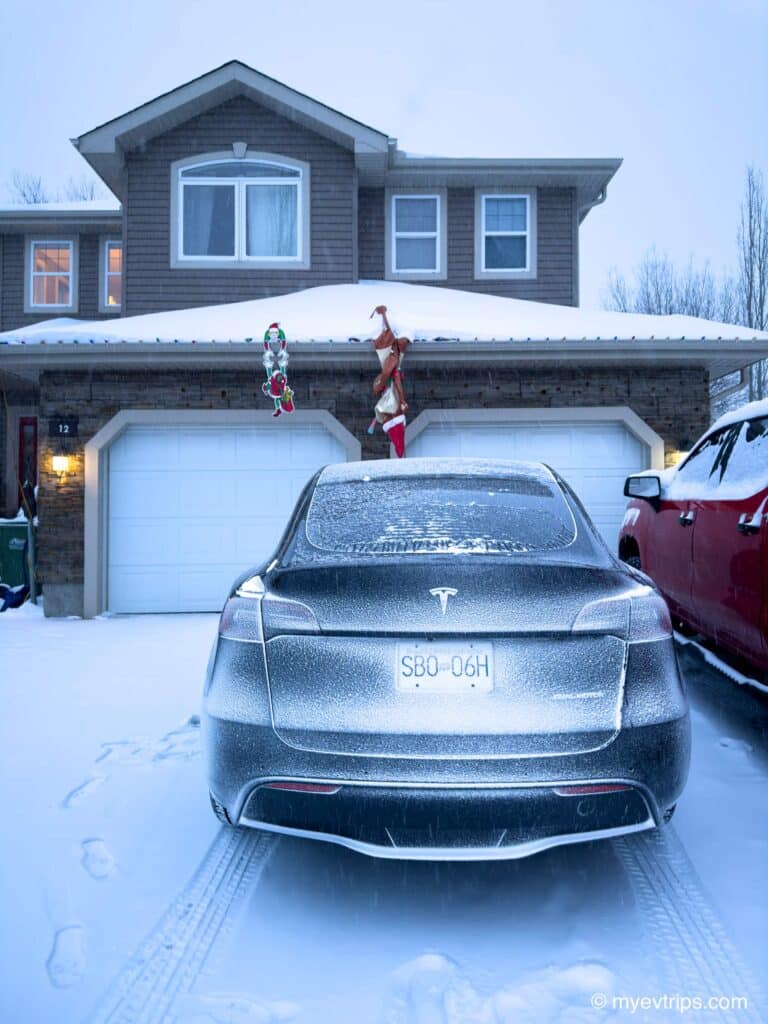
My Model Y handles Vancouver winters like a champ. And based on my experience, I see no reason it wouldn’t work in Yellowknife either, especially if your winter driving is local and you’re plugged in at home. When I hear folks say, “You couldn’t own a Tesla in the winter,” I say: you already plug in your gas car every night. What exactly is the difference?
Still not convinced? I spoke with other Canadian EV road trippers who’ve tackled extreme conditions in this Dempster Highway EV interview. Their stories echo what I’ve found: EVs are tougher than you think.
FAQ: Driving an EV in the Winter
What should I do if I live in a cold climate?
Make sure you have reliable charging at home, use winter tires, and plan for range loss — the same way you’d plan fuel stops in a gas car.
How much range do EVs lose in winter?
Depending on temperature, speed, and driving habits, range loss can be 15–30% or more in extreme cold.
Can you preheat an EV without unplugging it?
Yes, but it’s better to preheat while plugged in so you don’t drain the battery.
Are public chargers reliable in the winter?
Yes, though charging times may increase due to battery temperature. Use apps to check availability.
Are EVs safe to drive on snow and ice?
Absolutely. With instant torque and traction control, many EVs handle extremely well in winter conditions. Also, the right winter tires go a long ways.


100% I have a 2018 Model 3 in Manitoba, and it is -21C as I type this. Supposed to be -30 tomorrow morning. The car is permanently parked outside. EV ownership is more convenient that owning a gas car in the winter in almost every aspect, except, like you said, long distance driving.
Thanks, Manuel. Do you have L2 charging at home? I sure don’t miss pumping gas, especially at -30C!