

If you’re researching a home Tesla charging station, you’re likely trying to figure out the most practical, cost-effective, and future-proof way to charge your EV at home.
I’ve been through this myself, from basic Level 1 charging to using a 240V outlet at my townhouse, and the biggest lesson is this: the “best” setup depends less on the car and more on your driving habits, parking situation, electrical access, and long-term plans.
For most EV owners, Tesla home charging is where the real convenience of owning an electric vehicle kicks in. Instead of going somewhere to fuel up, you plug in at night and wake up with the range you need.
That one lifestyle shift is what makes EV ownership so easy once you have a decent home setup.
In this guide, I’ll break down the different levels of charging, the most common Tesla charging for home options, what works in a townhouse or strata, whether grants are worth it, and why I usually recommend a flexible non-Tesla charger even if you currently drive a Tesla.
Tesla Home Charging: Understanding Level 1, Level 2, and Level 3
Before choosing a Home charging tesla setup, it helps to understand the three charging levels.
Level 1 charging uses a normal 120V household outlet in North America. It typically delivers around 1.4 kW and adds roughly 5–8 km of range per hour.
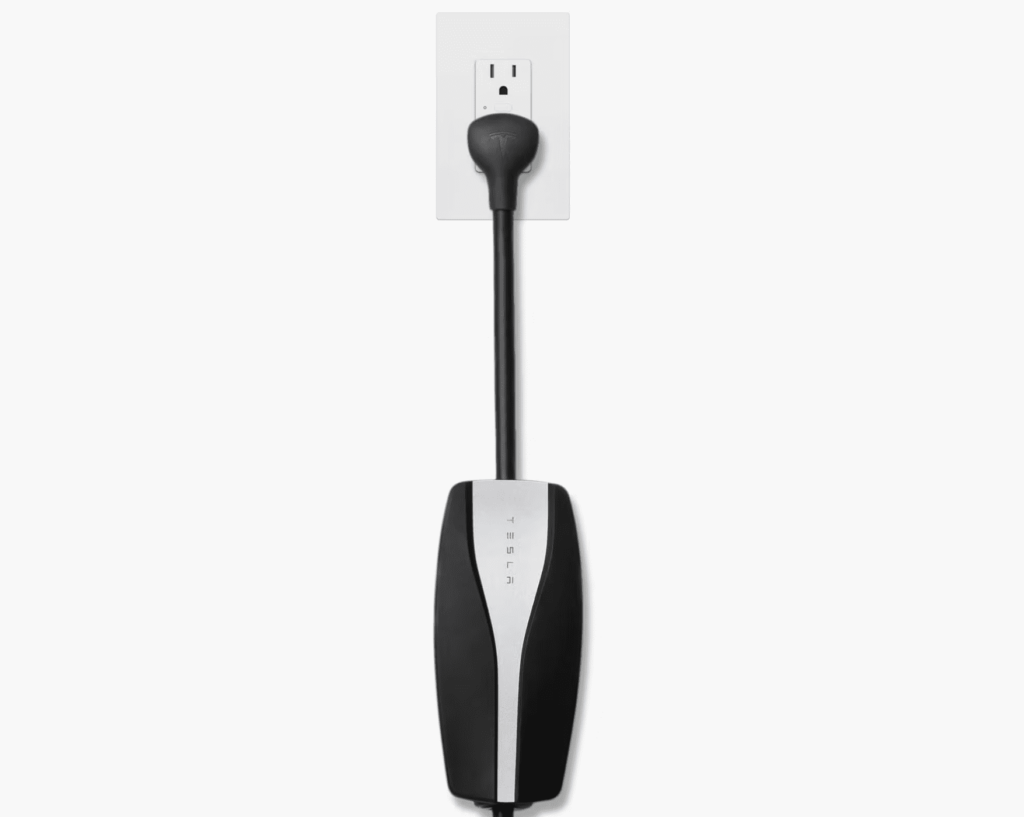
It is slow, but it can work if you drive short distances and plug in consistently overnight.
Level 2 charging uses a 240V circuit and is the most common type of home tesla charging station setup.
Depending on the circuit, charger, and vehicle, Level 2 charging usually delivers around 7–11.5 kW and can add roughly 30–70 km of range per hour. For most people, this is the sweet spot.
Level 3 charging, also called DC fast charging, is what you find at Tesla Superchargers and public fast chargers. These can deliver 50 kW to 250+ kW, but they are not realistic for residential use.
I’m not aware of any practical Level 3 home option for regular homeowners. The power requirements, equipment costs, and infrastructure needs are well beyond a normal house, townhouse, or condo setup.
Tesla Charging for Home with a Standard 110V Outlet
The easiest way to start with electric vehicle home charging is by using a standard 110V/120V outlet with the Tesla Mobile Connector. In North America, this usually means a regular 15 amp household circuit.
This is Level 1 charging, and while it is slow, it should not be dismissed. I had a neighbour who used Level 1 charging and it worked fine for him because he mostly drove short distances around town.
If your daily driving is light and your car sits parked overnight, a regular outlet can recover enough range for basic commuting.
The downside is obvious: it takes a long time. If you arrive home with a low battery or have a longer commute, Level 1 can feel limiting quickly.
It is best for light drivers, renters, backup charging, or people still deciding whether to invest in a proper Level 2 setup.
Home Charging Tesla with 30 Amp and 50 Amp Adapters
Where home electric vehicle charging stations become truly useful is Level 2 charging. This usually means installing or using a 240V outlet.
Some homes may have access to 30 amp circuits, which can still be a big improvement over Level 1. However, the more popular option is a 50 amp circuit, especially with a NEMA 14-50 outlet.
The 14-50 is common because it is widely supported, relatively easy for electricians to understand, and compatible with many EV chargers and mobile connector adapters.
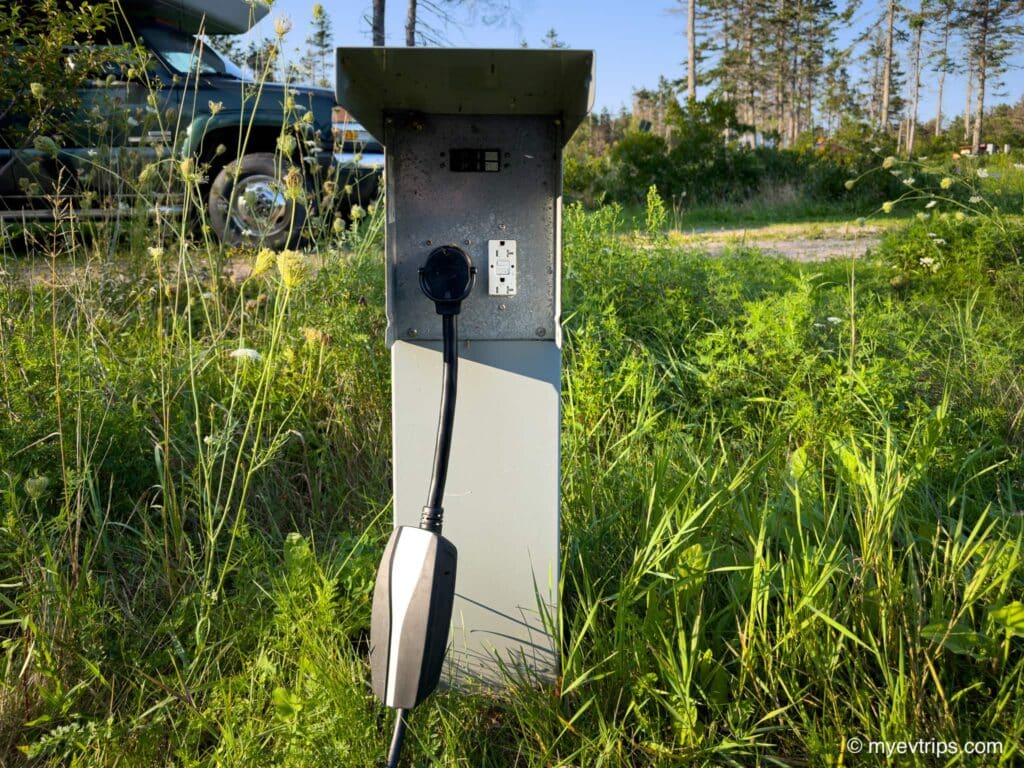
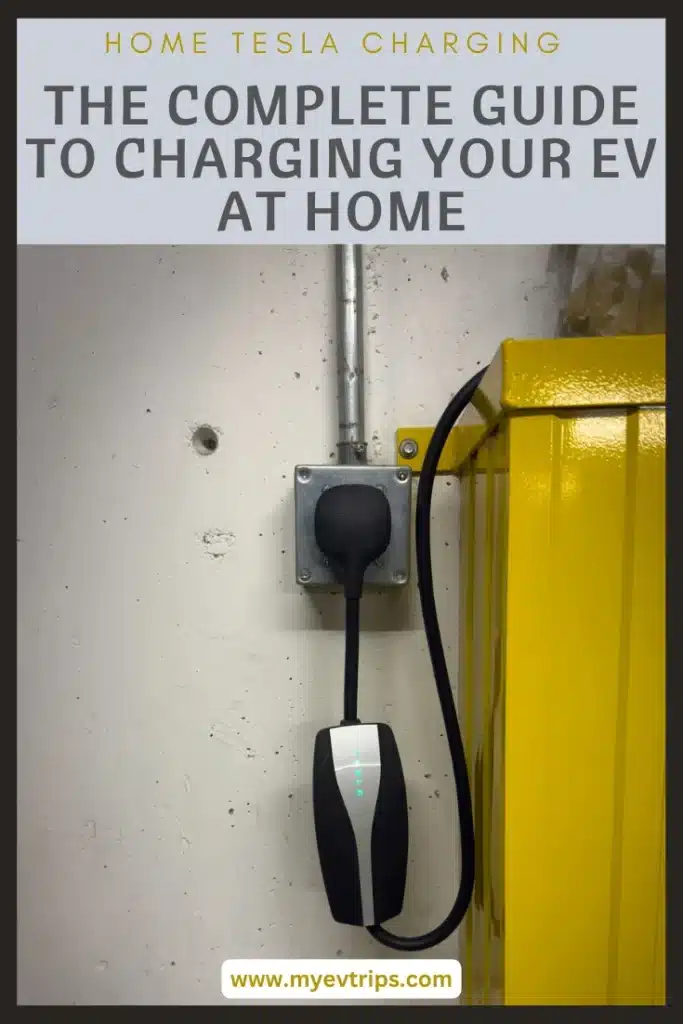
Another strong option is the NEMA 6-50, which is what I use at home. With my 6-50 adapter, I can charge overnight with no issue, and in many cases, charging takes about four hours depending on how much battery I need to add. For my use, that is more than enough.
This is also where having the right gear matters. I’ve covered the adapters and cable options I actually carry in my guide to the best Tesla EV charging adapters and cables, which is especially useful if you plan to charge at cabins, campgrounds, RV parks, or older outlets.
My Home Setup: Townhouse EV Charging in Vancouver
My own EV home charging setup is a good example of how shared residential charging can work without being overly complicated.
I live in a relatively new townhouse in Vancouver. At the time it was built, code required 50 amp outlets at every third stall. New builds now require more complete EV-ready access, but at the time, every third stall met the requirement.
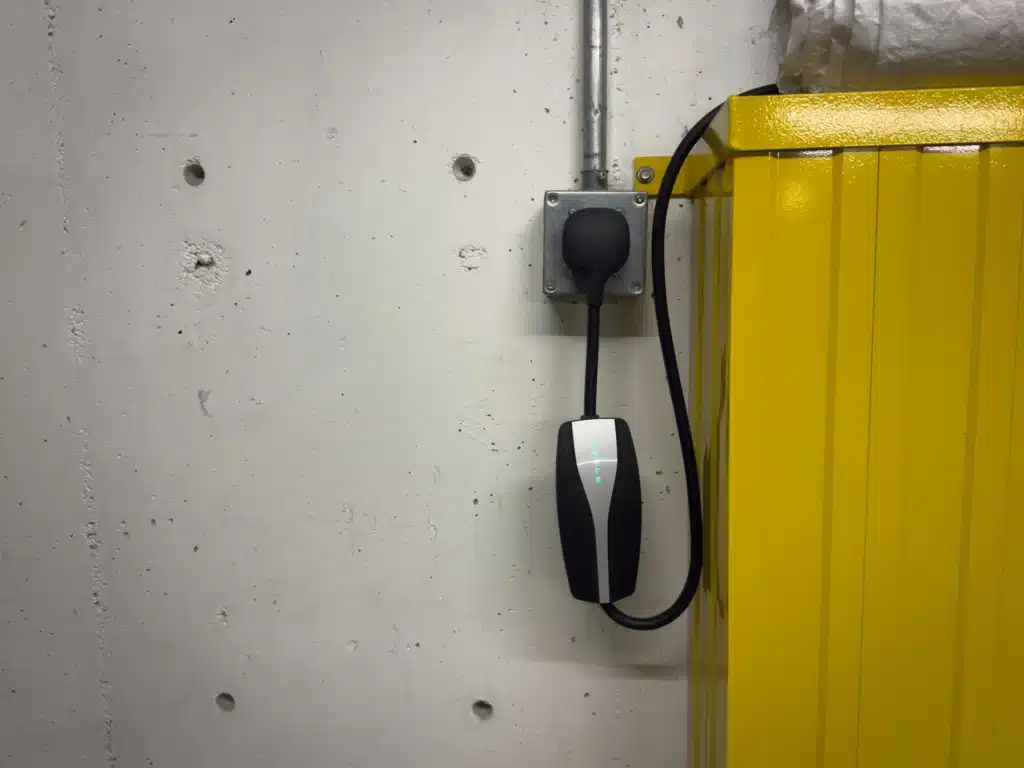
For me, this setup works great. I use a 6-50 adapter and charge through the shared outlet system. The cost is a flat $25 per month, which is convenient and easy for the strata to manage.
That said, I honestly pay more than I should because I do not drive much while I’m in town. Most of my bigger mileage comes from road trips. Around Vancouver, my day-to-day driving is limited, so a usage-based billing system would probably be cheaper for me.
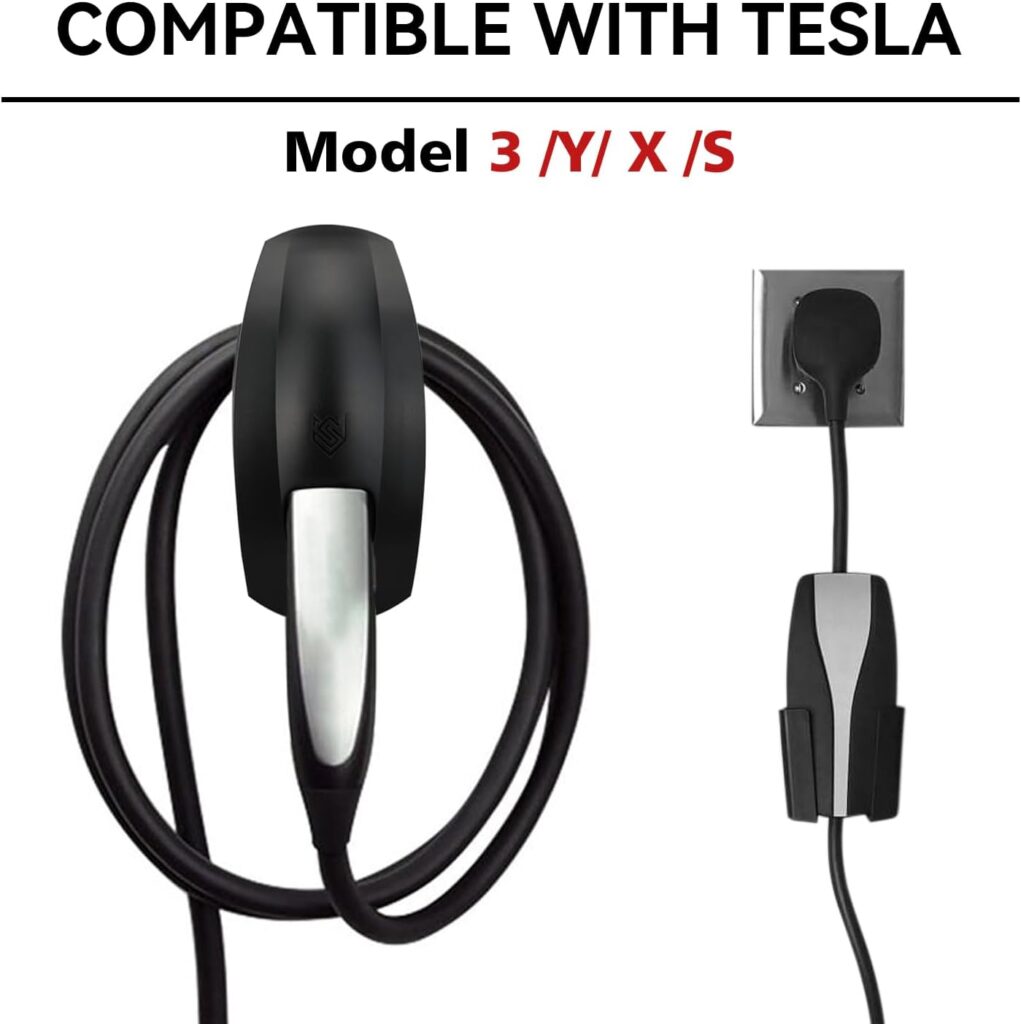
If you go the Tesla Mobile Connector route, I highly recommend picking up a wall holder to keep things organized and protect the connector from sitting on the ground. I’ve been using this Tesla Mobile Connector holder, which includes both a dock for the charger itself and a holder for the plug adapter.
We have discussed dedicated power to each stall, but at the time it was cost prohibitive. As more owners move to EVs, I think that conversation will become more realistic. I will likely push for it again and follow up with more details if we move ahead.
This is one of those topics where real-world experience matters. Charging at home is simple when you own a detached house. In a townhouse or condo, it becomes more about strata approval, billing fairness, electrical capacity, and future demand.
Electric Vehicle Home Charging: Tesla Wall Connector vs Non-Tesla Chargers
When choosing an electric vehicle home charging setup, Tesla owners naturally look at the Tesla Wall Connector first. It is clean, reliable, and designed to work perfectly with Tesla vehicles.
The Tesla Wall Connector is a great product if your household is fully committed to Tesla. It offers fast charging, a polished look, and a simple user experience.
That said, while I usually recommend considering a non-Tesla charger for long-term flexibility and resale value, I do own a Tesla Wall Connector and will likely install it once I get things sorted with my strata.
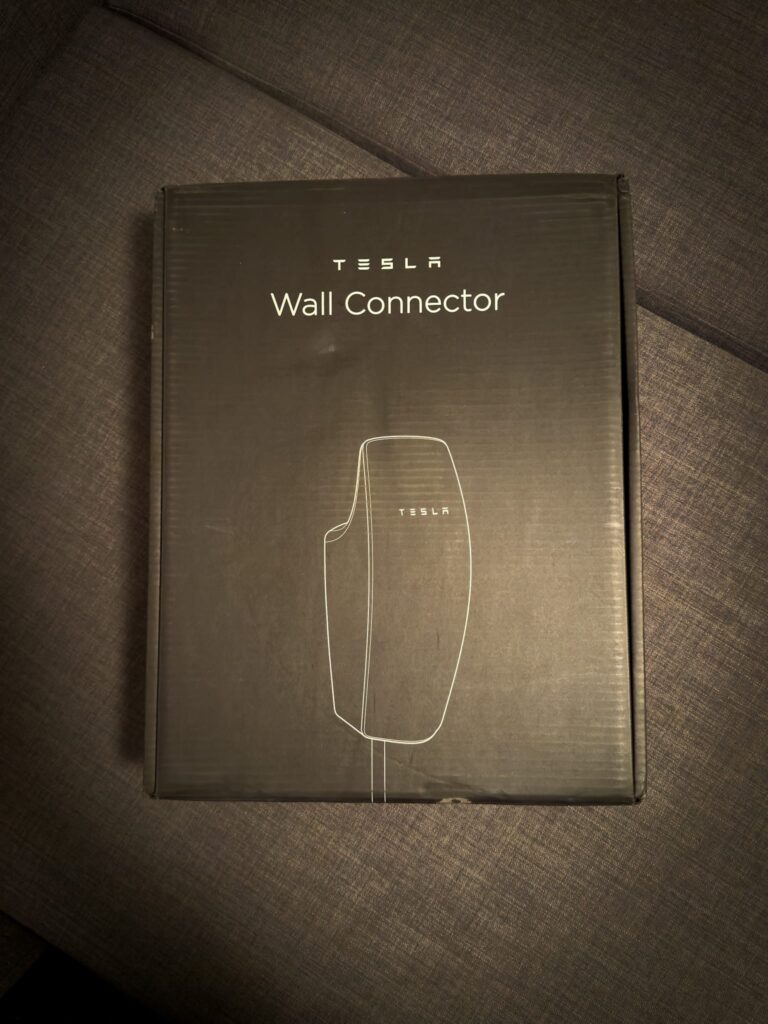
My next vehicle, the Rivian R2, will use the NACS charging standard, making Tesla hardware a more appealing long-term option than it once was.
You may switch vehicles later. A future buyer may not own a Tesla. A guest or family member may drive a different EV.
That flexibility matters.
This is also why understanding the broader charging ecosystem helps. My broader EV charging guide breaks down public and private charging basics, and it pairs well with this home-focused post.
EV Home Charging: Networked vs Non-Networked Chargers
Another decision with EV home charging is whether to install a networked or non-networked charger.
A networked charger connects to the internet and usually offers features like app control, usage tracking, billing, scheduling, and remote management. These features are useful in shared buildings because they make it easier to track consumption and assign costs.
The downside is that networked chargers often cost more, may require subscriptions, and need reliable internet access in the garage or parking area. In a townhouse, parkade, or outdoor stall, that is not always simple.
Non-networked chargers are more basic. They do not offer as many smart features, but they are usually cheaper, simpler, and less likely to become annoying over time.
Since most EVs already let you schedule charging and track energy use through the vehicle app, many home users do not need a smart charger at all.
For shared buildings, networked chargers may be useful. For a private garage or personal stall, I lean toward simple and non-networked unless there is a specific reason to track usage.
EV Home Charging Grant: Canada and Provincial Incentives
The ev home charging grant situation in Canada changes often, so always verify current eligibility before buying equipment or hiring an electrician.
In British Columbia, EV charger rebates have often been tied to approved equipment and, in some cases, networked charging solutions. That makes sense from an administrative and usage-tracking perspective, especially for multi-unit residential buildings.
However, it is not always the best use of money for the owner if the charger requires ongoing fees or extra connectivity that you otherwise would not need.
Start with these pages rather than relying on outdated blog posts or installer claims:
- British Columbia: CleanBC / BC Hydro EV charger rebates
- Ontario: Charging electric vehicles
- Quebec: Financial assistance for electric vehicles
- Alberta: Electric Vehicle Association of Alberta
- Federal: Zero Emission Vehicle Infrastructure Program
If you are comparing provinces more broadly, I’ve also ranked electric vehicles in Canada by province and charging friendliness, which gives helpful context on how different regions are supporting EV adoption.
How to Get EV Chargers Installed in a Strata
Installing home electric vehicle charging stations in a strata usually takes more effort than simply calling an electrician.
First, review your strata bylaws and parking rules. You need to know whether your stall is assigned, limited common property, or common property, because that can affect approval.
Next, contact strata council with a clear request. Include what type of charger or outlet you want, where it would go, who would install it, and how electricity would be paid for.
Then, get an electrical assessment. A licensed electrician may need to confirm building capacity, panel access, conduit routes, and whether load management is required.
After that, expect a discussion about billing. Options usually include a flat monthly fee, a dedicated meter, a networked charger with usage tracking, or a shared cost model.
Finally, get written approval before work begins. Do not assume verbal approval is enough, especially in a shared building.
The best approach is to frame EV charging as a building improvement, not just a personal convenience. More EVs are coming, and buildings that solve this early will be more attractive to future buyers.
Battery Health and Daily Charging Habits
One of the most common concerns with Tesla home charging is whether daily charging damages the battery.
In general, home charging is not the problem. Poor habits can be. For most Tesla owners, the goal is to avoid sitting at very high states of charge unless needed for a trip.
I usually charge to a comfortable daily limit and only go higher before road trips.
For a deeper dive, I’ve written about Tesla battery best practices and also documented my own Tesla battery health check and degradation results. Those posts are good follow-ups if you are wondering how charging habits affect long-term ownership.
Home Charging vs Road Trip Charging
Home charging is the foundation, but road trips are where charging planning becomes more interesting.
At home, I rarely think about charging. On the road, I think about charging constantly: where the next charger is, what speed it offers, whether it is reliable, and what backup options exist.
That is why I recommend understanding charging apps even if you mostly charge at home. My guide to making sense of EV charging apps and maps explains when to use PlugShare, ABRP, Tesla navigation, and regional apps.
I’ve learned this the hard way on trips like my Edmonton to Yellowknife EV drive, where charging gaps and wildfire issues made planning more important. The same applies to more remote adventures, like this interview on whether an EV road trip on the Dempster Highway is actually possible.
Home charging gives you confidence. Road trip charging teaches you humility.
Charging Etiquette, Winter Range, and Real-World EV Ownership
Even if this post is focused on EV home charging, there are a few habits that carry over to public charging.
Be mindful of shared chargers, move your car when finished, and avoid treating a public charger like personal parking. I’ve put together more thoughts in my guide to EV charging station etiquette, which is especially relevant as more people buy EVs.
Winter also changes the equation. Charging can be slower, range drops, and preconditioning becomes more important. If you live in Canada, my experience living with an EV in the winter is worth reading before your first cold season.
And if you are new to EVs, mistakes happen. I’ve had awkward charging moments too, including my first EV charging fail in France. The upside is that every mistake makes you better prepared for the next trip.
Can You Install Level 3 Charging at Home?
A lot of people ask if they can install something like a Tesla Supercharger at home.
For normal residential use, the answer is no.
Level 3 charging requires commercial-grade electrical infrastructure, expensive DC fast charging hardware, and power levels far beyond what a typical house, townhouse, or condo can support.
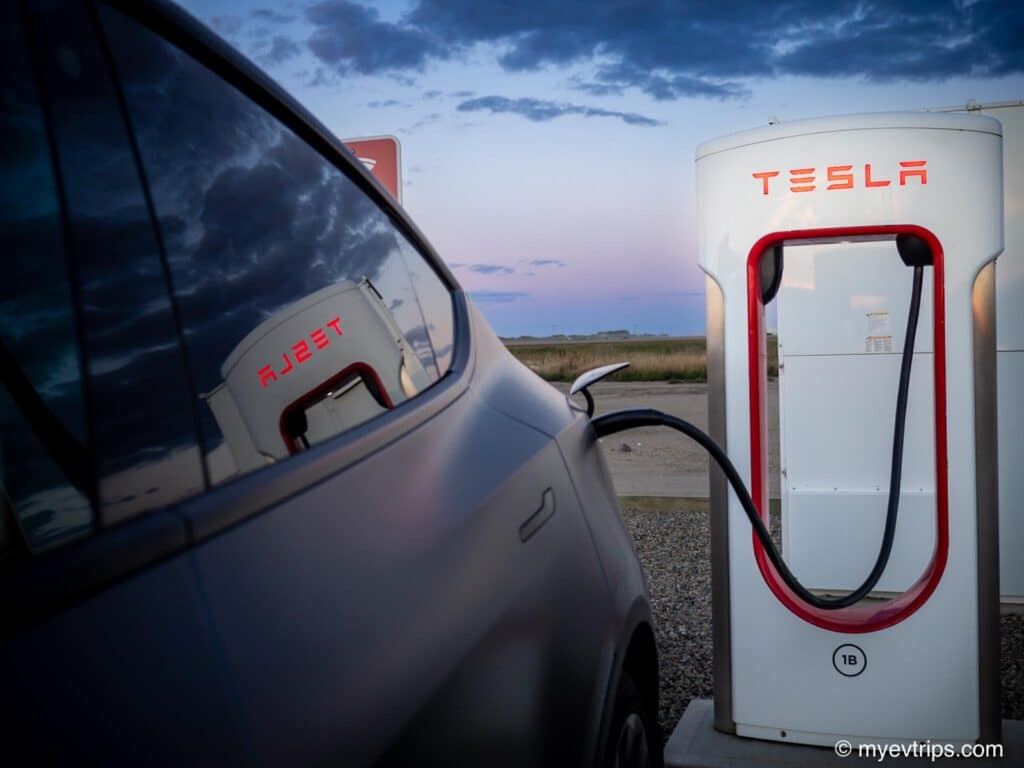
For now, Level 2 is the realistic maximum for Tesla charging for home. And honestly, that is fine. If your car sits overnight, Level 2 is more than enough for almost every driver.
I’ve tested plenty of road trip scenarios where fast charging matters, including whether it is possible to road trip without using Tesla Supercharger stations. At home, though, speed matters less than reliability and convenience.
What Happens If Everyone Gets an EV?
A common concern with home electric vehicle charging stations is whether the grid can handle mass adoption.
It is a fair question, especially in strata buildings where multiple residents may eventually want chargers.
The answer is usually not “install unlimited 50 amp circuits everywhere.” Load sharing, smart panels, managed charging, off-peak pricing, and building-wide planning will all matter.
I’ve explored this broader topic in more detail in my post on what happens to electricity demand if everyone drives an EV.
For strata buildings, this is exactly why early planning matters. Solving one charger at a time may work for the first few owners, but eventually the building needs a scalable plan.
Final Thoughts: What Home Tesla Charging Setup Works Best?
The best home Tesla charging station is the one that matches how you actually drive.
If you barely drive and have access to a regular outlet, Level 1 may be enough. If you commute regularly or want a stress-free setup, Level 2 is the clear winner.
If you live in a townhouse or condo, the best solution may depend as much on strata rules and billing as on charging speed.
For most people, I recommend a Level 2 setup on a 50 amp circuit, using either a 14-50 or 6-50 outlet, paired with a flexible non-Tesla charger if you want the best long-term compatibility.
Tesla’s ecosystem is excellent, but EV ownership is moving quickly. NACS may be becoming the North American standard, but keeping your charging setup open to different vehicles still makes sense for resale value and future flexibility.
At the end of the day, EV home charging is one of the biggest perks of owning an electric vehicle. Plug in at night, wake up ready, and save the fast charging for road trips.
SAVE ON A NEW TESLA!
Thinking of buying a Tesla? Use this referral link to get up to $1,300 off!*
*As of August 2024, Tesla has reinstated its referral program and introduced attractive financing options!
FAQ: What is the best home Tesla charging station?
What is the best home Tesla charging station?
A Level 2 setup using a 240V outlet like a NEMA 14-50 or 6-50 offers the best balance of speed and cost.
Can I rely on Level 1 charging?
Yes, if your daily driving is minimal. Otherwise, Level 2 is recommended.
Are networked chargers worth it?
They can be useful, but many people don’t need the extra features or subscription costs.
How much does it cost to install a home charger?
Costs vary widely depending on electrical upgrades but typically range from a few hundred to a few thousand dollars.
Can strata buildings install EV chargers easily?
It’s becoming more common, but the process involves approvals, assessments, and planning.
Will EREVs replace full EVs?
Probably not. Full battery-electric vehicles are still the long-term direction of the industry. However, EREVs may accelerate adoption by making electrification less intimidating for mainstream buyers. For many consumers, they represent a transitional technology rather than a permanent endpoint.